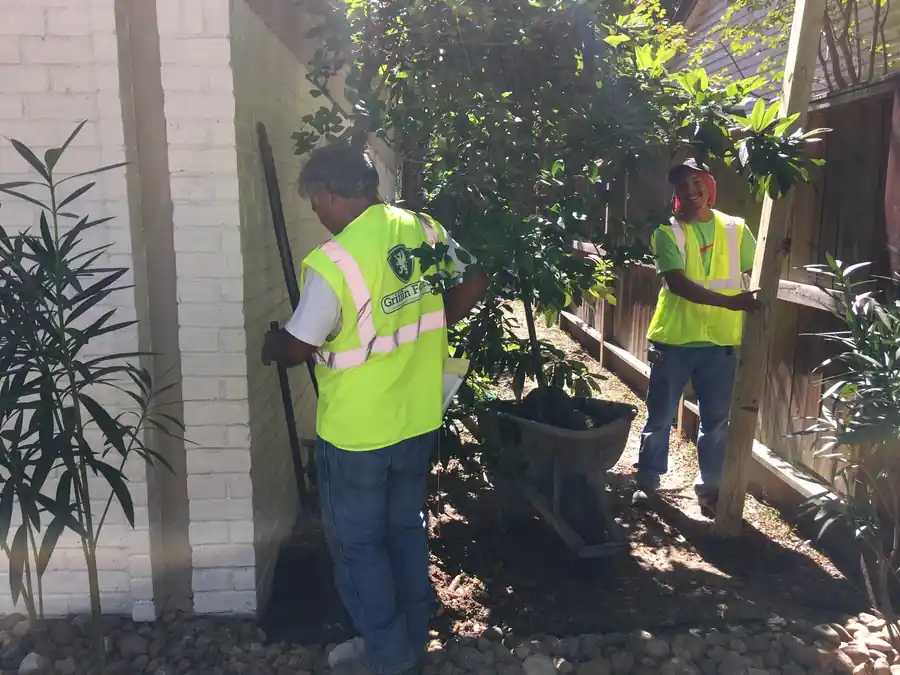
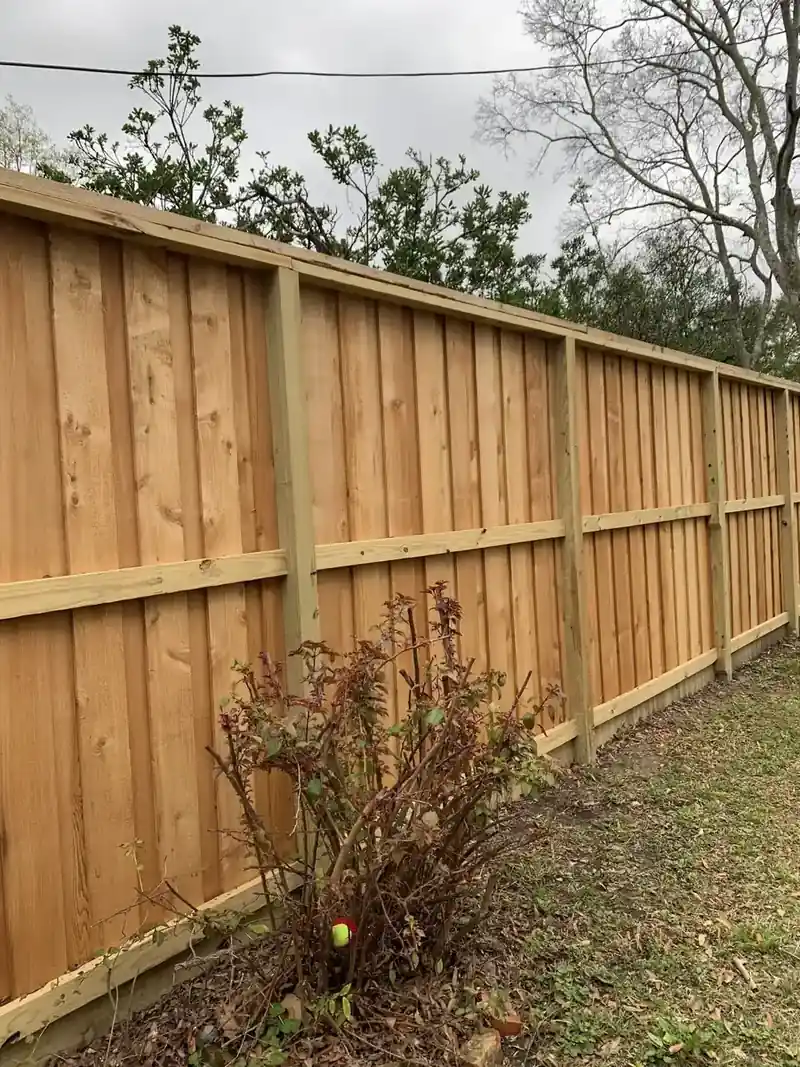
Fence maintenance extends the life of any fence by years. Griffin Fence handles routine fence repairs, gate adjustments, hardware replacement, and section repairs across the Houston metro.
Fence maintenance covers everything between brand-new install and full replacement: replacing damaged pickets, tightening loose hardware, resetting leaning posts, adjusting sagging gates, and lubricating gate operators. Routine maintenance can add 5 or more years to the life of a typical Houston fence — and the economics strongly favor preventive work over reactive replacement.
Walk the fence line and push-test every post. Re-stain or re-seal every 2 to 3 years. Oil-based penetrating stains outperform film-forming finishes in Houston's humidity. Inspect after every major storm.
Inspect the zinc coating. Once the coating is compromised and rust appears, deterioration accelerates. Spot-treat with cold galvanizing compound. Check tension every two years — Houston clay movement pulls at terminal posts.
Inspect all welds and fastener points for rust bubbling. Grind, prime, and repaint before rust spreads to welds. Full recoat every 5 years — powder coat begins micro-cracking at 7 to 10 years in Houston UV.
Lubricate all moving parts with silicone-based lubricant. Test the battery backup. Inspect photo eyes for alignment drift. Pre-hurricane season (May) inspection includes board, wiring, and housing seals.
Inspect fence and gate immediately after any significant storm. Sustained winds above 45 mph can shear posts that had loosened from soil movement even when pickets appear undamaged.
Quarterly inspection with documented written reports for property management records. Annual maintenance programs available for commercial clients with priority repair scheduling.
Visual assessment of all fence sections, looking for rot, corrosion, leaning, and hardware failure across the entire fence line.
Push test at every post and plumb check. More than one inch of flex means the post needs resetting in Houston's clay soil.
Hinges, latches, tension bands, and caps inspected. Gate alignment checked and adjusted on the same visit when possible.
Itemized list of findings categorized by urgency, plus a written quote for any repairs identified. Small repairs completed on the same visit when possible.
In 47 years of Houston fence work, we have seen how the Gulf Coast climate destroys neglected fences faster than any mechanical wear. The combination of 70–80% average humidity, temperatures above 100°F in summer, tropical storm season June through November, and expansive clay soil creates conditions that accelerate deterioration faster than most parts of the country.
Tropical storms: The primary failure mode for wood fences is post failure, not picket damage. Posts that had loosened from soil movement shear at the soil line when sustained winds exceed 45–50 mph. After Hurricane Harvey in 2017, Griffin Fence replaced thousands of fence sections where the pickets were fine but the posts had snapped or pulled out.
Heat and drought: When Houston's clay soil loses moisture in July and August, it contracts and can pull away from post collars, leaving an air gap that destabilizes the post. A fence that was plumb in April may lean noticeably by September in a drought year — a maintenance visit catches this before failure.
The Economics: A cedar fence installed correctly lasts 12 to 18 years. With consistent maintenance, that same fence can last 20 to 25 years. Preventive maintenance costs significantly less than premature full replacement.
Explore more on Griffin Fence: wood fence maintenance guide and wood fence repair guide.
For Houston building and zoning information, the Houston Permitting Center is the official source. Harris County weather data from NWS Houston, TX is useful for understanding storm and humidity impacts on fence materials. See also fence repair and residential fence installation.