What Is a Horizontal Fence?
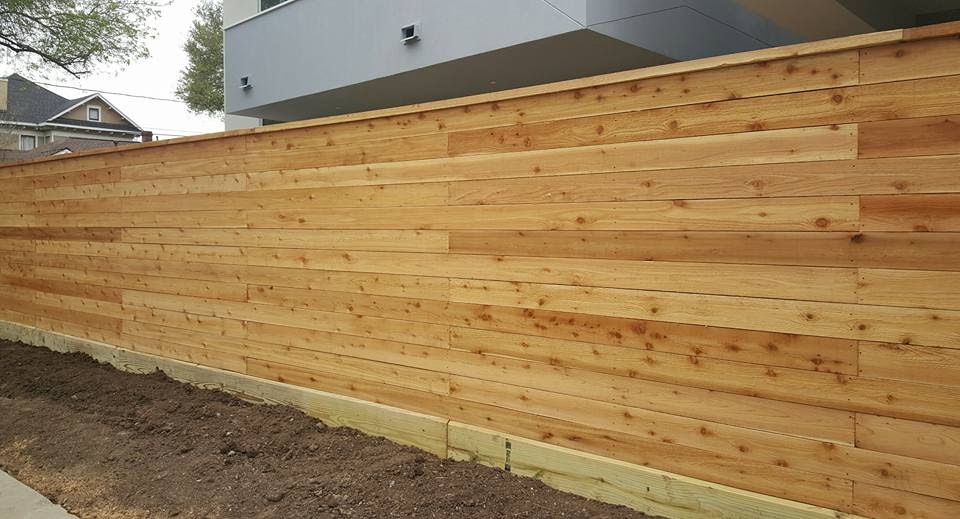
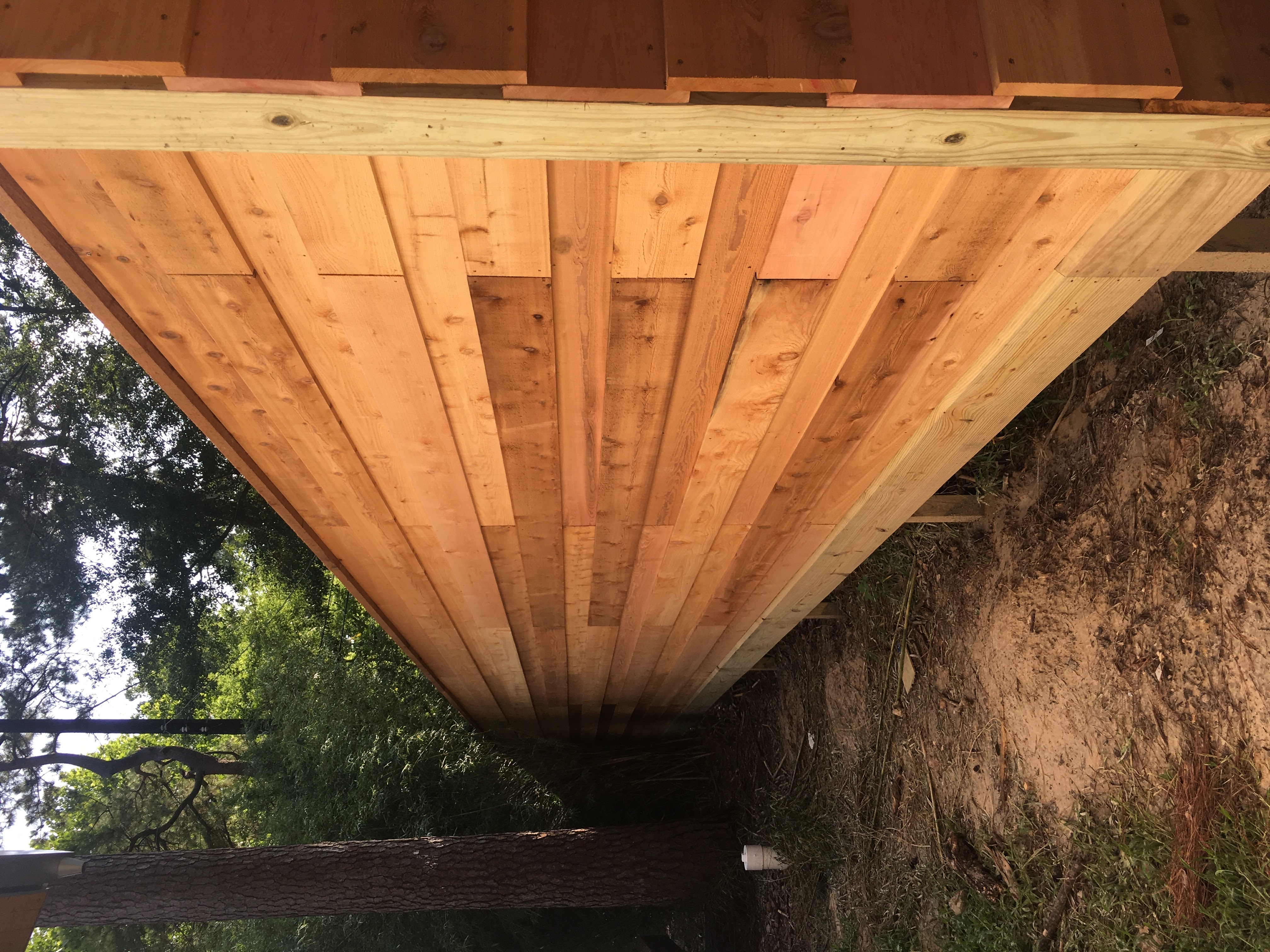
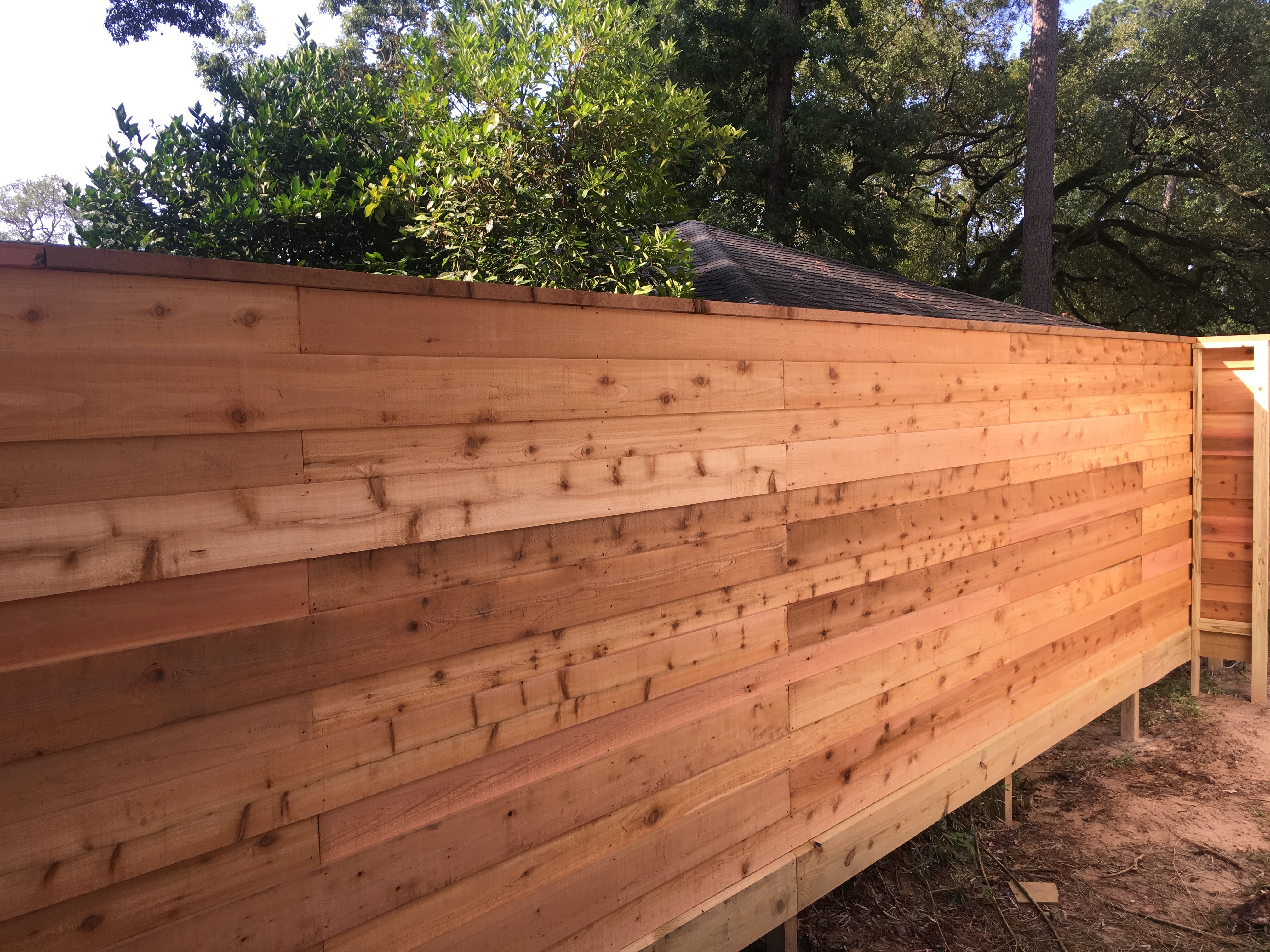
A horizontal fence is one where the fence boards or slats run parallel to the ground — left to right — rather than in the traditional up-and-down orientation of vertical privacy fence. This orientation creates a strikingly different visual character: clean horizontal lines that emphasize width, a sleek profile that reads as modern and architectural rather than traditional, and a natural visual connection to the ground plane of the landscape.
Local to Houston, TX
Griffin Fence is headquartered in Houston — not a national franchise. Our crews know local soil, permits, and HOA requirements.
All Fence Types
Wood, iron, chain link, vinyl, aluminum, pool fence, and automated gates — one contractor for every fence need.
Permit Specialists
We know the specific fence permit requirements for every city and unincorporated Harris, Fort Bend, and Montgomery county area.
151+ Five-Star Reviews
151+ five-star Google reviews. Most customers find us through neighbor referrals — the highest form of endorsement.
Fast Turnaround
Most residential fence projects are completed in 1–3 days. Free estimates are available within 24 hours of your call.
Free Estimates
Call 713-937-6611 or request a quote online. We'll visit your property and provide a written estimate at no charge.
Horizontal fencing is not a new concept — split rail fences and post-and-rail ranch fence Houston, TXs are horizontal by definition. But horizontal privacy fence, where close-spaced boards create a solid or semi-solid barrier at full privacy height, is the style that has captured attention in Houston's design-forward residential market over the past decade.
Materials for Horizontal Fences in Houston, TX
Cedar — The Preferred Houston Choice
Western red cedar is the most popular material for horizontal wood fence installation Houston, TX in Houston, TX, and for good reason. Western Red Cedar's natural oils provide substantially better moisture resistance than pine, which matters significantly in a climate where fence boards are rained on 65+ inches per year. Cedar is also lighter than treated pine — an important factor for horizontal fence because the boards must span the distance between posts without sagging, and lighter boards maintain that span more cleanly over time.
Griffin Fence sources quality cedar for horizontal fence with particular attention to grain orientation — vertical grain cedar holds up better in wet conditions than flat-sawn cedar. For horizontal fence where the top edge of each board is exposed to standing water after rain, grain selection affects longevity meaningfully.
Pressure-Treated Pine
Pressure-treated pine is the budget alternative to cedar for horizontal fence. Treatment with preservative chemicals extends pine's rot resistance significantly beyond untreated wood. The trade-off: treated pine is heavier than cedar (relevant for spanning between posts) and tends to check (crack along the grain) more aggressively as it dries after treatment. For long-span horizontal boards, treated pine's tendency to cup and twist over time can be more problematic than with vertical fence applications. Griffin Fence typically recommends cedar over treated pine for horizontal applications specifically.
Composite (Trex-Style)
Horizontal composite fence — composite boards running left to right — delivers the modern horizontal aesthetic with zero maintenance. For Houston homeowners who want the contemporary look without the maintenance commitment that wood demands in this climate, composite horizontal fence is an excellent choice. The wood-grain texture of quality composite products reads particularly well in horizontal orientation, where the grain direction aligns naturally with the board direction.
Aluminum Horizontal Slats
Aluminum horizontal fence uses extruded aluminum slats rather than wood boards. The result is an industrial-modern profile with a thin, precise look that wood cannot achieve. Aluminum slats are rust-proof, require no maintenance, and are particularly popular in commercial modern applications — businesses along the Energy Corridor, modern office campuses, and architectural custom homes in Montrose and Midtown. Griffin Fence installs horizontal aluminum fence Houston, TX for both commercial and high-design residential applications.
Spacing Options and Their Implications
Tight (Full Privacy)
Boards installed edge-to-edge with minimal or no gap between them. Full privacy — no sightlines through the fence. The most popular option for backyard applications where privacy is the primary goal. Important note for Houston: fully solid horizontal fence acts as a more effective wind sail than spaced configurations. In the Houston context, a solid 6-foot horizontal fence in an exposed backyard position should be built with stronger posts and concrete footings than a comparable vertical fence.
Spaced (Semi-Privacy with Airflow)
Boards spaced with 1–2 inch gaps between them. Still blocks visual lines at any direct angle but allows air to pass through. This is the configuration Griffin Fence most commonly recommends for Houston properties — the spacing reduces wind load significantly compared to solid, improves air circulation in Houston's oppressive summer humidity, and maintains the modern horizontal aesthetic. Shadow-box horizontal (boards on alternating sides of the rail) is a variation that provides near-privacy while further improving airflow.
Wide Spaced (Decorative/Boundary)
Boards spaced several inches apart — more decorative than private, but clearly defining a boundary. Useful for front yard situations where a boundary marker is desired without visual blockage, or for framing a view rather than screening it. Wide-spaced horizontal fence pairs well with ornamental planting along its base.
The Houston Wind Load Issue — Critical Engineering Consideration
This is the most important engineering consideration specific to Houston that every horizontal fence buyer should understand. Horizontal fence — particularly solid horizontal fence — behaves differently from vertical fence in high wind conditions.
A vertical board fence has many small gaps between boards (board-on-board overlap reduces the gap but doesn't eliminate it), and those gaps allow some wind pressure to bleed through the fence. More importantly, the long vertical boards shed wind from their edges. A solid horizontal privacy fence with no gaps presents a larger effective wind surface area and, because horizontal boards resist bending along their length differently than vertical boards of equal dimensions, can be more susceptible to racking forces in sustained high winds.
Permit Check: Houston city limits don’t require permits for residential fences under 8 ft. Fort Bend and Montgomery counties have no fence ordinance. HOA approval is separate from city permits.
Houston's wind reality: the metro sits in a region that experiences significant wind events multiple times per year — severe thunderstorms, derechos, and tropical weather that generates sustained winds of 50–80 MPH at or above tropical storm strength. Hurricane Harvey generated sustained winds of 130 MPH at landfall and significant wind well inland. A fence that was marginally adequate for standard Houston wind loads becomes inadequate in a major storm event.
Griffin Fence's recommended approach for horizontal fence in Houston:
- Spaced boards preferred over solid — even 1-inch spacing dramatically reduces wind load vs. solid
- Steel posts preferred over wood posts — our steel post system provides significantly greater moment resistance at the base; see our wood fence with steel posts page for details
- Properly sized concrete footings — deeper and wider than minimal residential specifications
- Post spacing — horizontal fence with solid boards may warrant closer post spacing to reduce the span each post section must resist
Height Options and Permit Considerations
Horizontal fence is available in 4-foot, 5-foot, 6-foot, and 8-foot heights. The most commonly installed height in Houston residential applications is 6 feet. Permit thresholds by jurisdiction:
- City of Houston, Bellaire: Fences under 8 feet do not require a permit for standard residential. Bellaire requires a permit only for fences over 8 feet and pool enclosures.
- Pearland: No city permit required for residential fences.
- Sugar Land: Building permit required for all fence installations.
- League City: Permit required for fences over 6 feet.
- West University, Memorial Villages: Permits required through respective city building departments for all fence work.
- Unincorporated Harris County (Cypress, Spring, parts of Katy): Generally no permit required for residential fences under 8 feet.
Post Options: Wood vs Steel Posts for Horizontal Fence
The post system is more critical for horizontal fence than for vertical fence because of the wind load considerations discussed above. Two primary options:
Wood posts (4x4 or 6x6): Traditional approach. Less expensive than steel. Adequate for sheltered locations or spaced-board configurations. In Houston clay soil, wood posts are susceptible to rot at the soil line — the most common failure point for all wood fence in this climate. Average life of a wood post in Houston: 8–12 years.
Free Estimate Included: Every project starts with a free, in-person estimate. Written quote good for 14 days. No pressure — call 713-937-6611.
Steel posts with wood boards: Griffin Fence offers a signature system — galvanized square steel tube posts (typically 2"x2" or 2"x3") set in concrete, with wood rails and boards attached via brackets. The steel posts do not rot, do not heave from clay soil movement, and resist wind loads far more effectively than wood posts of comparable diameter. The fence looks identical to a standard horizontal wood fence from the exterior — the steel posts are essentially invisible once boards are installed. This is Griffin Fence's recommended post system for horizontal fence in Houston, TX. Griffin Fence also offers steel railing, which makes the structure stronger and gives an additional design feature. Here is a clear example of a steel post and railing on a horizontal fence.
.jpg)
Where Horizontal Fence Is Popular in Houston, TX
The Heights, Montrose, Midtown: These inner-loop Houston neighborhoods are ground zero for modern residential architecture in Houston, TX. New construction and renovation projects in these areas routinely specify horizontal cedar or composite fence as the appropriate complement to contemporary home designs. The horizontal fence profile is as much an architectural statement as the house itself in these neighborhoods.
Energy Corridor: West Houston's Energy Corridor has a significant population of design-conscious homeowners, many with connections to architecture, engineering, and international business. Modern horizontal fence has been adopted widely in Energy Corridor neighborhoods.
151+ Five-Star Reviews: Griffin Fence has earned 151+ five-star Google reviews — every installation backed by a 1-year workmanship warranty.
Newer Katy and Cypress Subdivisions: Bridgeland (Cypress) and newer phases of Katy's master-planned communities are seeing horizontal fence in the sections where contemporary home designs are concentrated. The style is appearing in Cross Creek Ranch, Elyson, and Bridgeland's newer village sections.
HOA Considerations — Check Before You Order
This point deserves emphasis: many traditional Houston HOAs have deed restrictions and design guidelines written decades ago, before horizontal fencing became a mainstream style. These older documents often specify "board fence" or "privacy fence" without defining orientation, which can be interpreted either way by an ARC committee.
Before ordering material for a horizontal fence in any Houston HOA community, get explicit written approval from the ARC committee. Do not assume that because horizontal fence isn't specifically prohibited, it is approved. Communities with active ARCs — The Woodlands RDRC, Cinco Ranch, First Colony, Sienna Plantation, Shadow Creek Ranch — all require written architectural approval for any fence installation. Submitting for approval before material purchase protects you from having to remove a fence that the committee rejects after installation.
Houston Note: Houston’s gumbo clay soil and hurricane wind exposure require deeper post footings and galvanized hardware than national minimums.
Griffin Fence advises on HOA requirements during the estimate visit and can help you understand what documentation to submit for ARC approval.
Service Area
"We've been building fences in the Houston area since 1979 — we know every city's permit office, every HOA's required style, and every neighborhood's soil conditions."— Griffin Fence — Houston, TX
Griffin Fence installs horizontal fence throughout the greater Houston metro: Houston, TX, Katy, Sugar Land, Pearland, Cypress, Conroe, The Woodlands, Spring, Baytown, Bellaire, Bunker Hill Village, Fresno, Hedwig Village, Hunters Creek Village, Jersey Village, League City, Missouri City, Richmond, Spring Valley Village, Stafford, Tomball, Waller, and West University.
Explore more on Griffin Fence: cedar board-on-board privacy fence, horizontal fence guide for Houston homeowners, and board-on-board vs. shadow box fence.