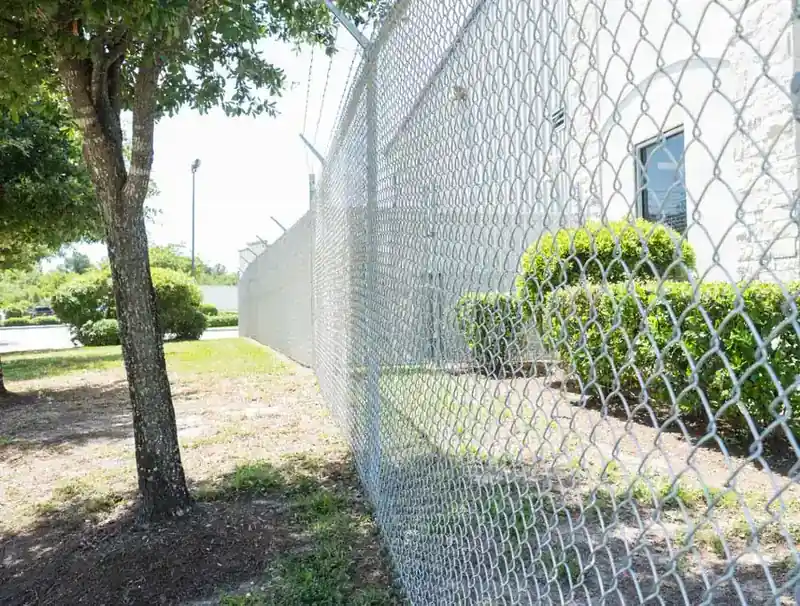
Griffin Fence installs perimeter security fencing for oil and gas facilities, pipe yards, tank farms, and refineries in the Houston Ship Channel corridor — heavy-gauge galvanized steel, barbed wire toppers, and wide-span vehicle gates built to API RP 780 specifications. Serving Houston's industrial corridor since 1979.
The Houston Ship Channel and surrounding petrochemical corridor is one of the most security-critical industrial environments in the country. Perimeter fencing at oil and gas facilities must meet API RP 780 security recommendations, withstand the corrosive combination of H2S and coastal chloride, and integrate with access control systems that manage vehicle and personnel entry. Griffin Fence has been installing industrial-grade perimeter fencing for Houston facilities since 1979.
Our crews are trained for active industrial site safety protocols — JSA documentation, toolbox talks, hot work permit coordination, and PPE requirements for petrochemical environments. We coordinate with your site safety officer before any work begins and can phase installation to avoid disruption to active operations.
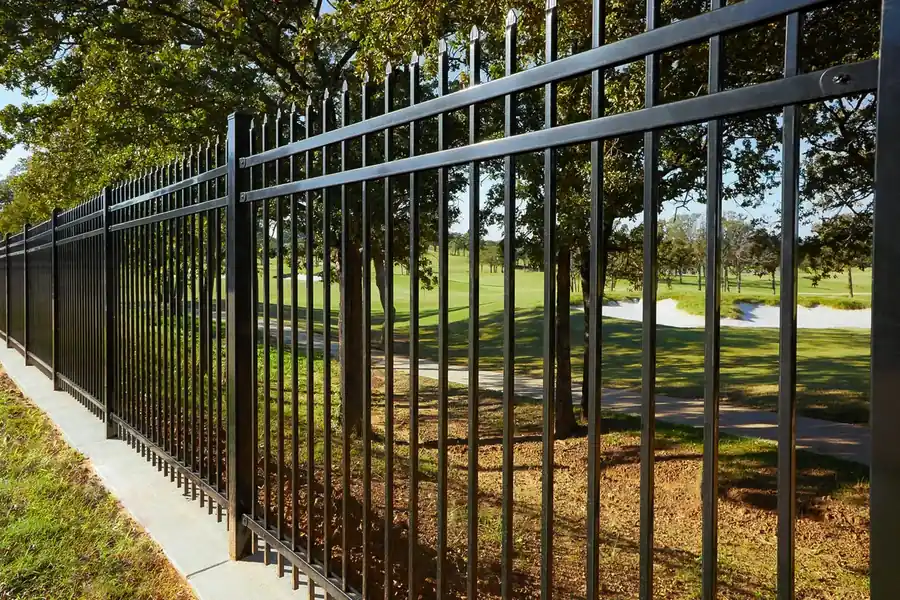
From API RP 780-compliant perimeter chain link to wide-span truck gates and anti-climb toppers — every component specified for the petrochemical environment.
8-foot minimum perimeter chain link with anti-climb features and controlled access points per API RP 780 security recommendations. 9-gauge or heavier galvanized fabric with UL-listed gate operators.
Three-strand or V-arm barbed wire toppers and concertina razor ribbon for high-security petrochemical perimeters. Outward-angled arms maximize deterrence at 8 to 12-foot fence heights.
Wide-span slide gates and swing gates for tanker truck and heavy equipment access. 20 to 40-foot openings, electric operators, and access control systems compatible with site SCADA and security platforms.
ASTM A123 hot-dip galvanized steel with vinyl coating for sites near refineries where H2S and coastal chloride accelerate corrosion. Schedule 40 pipe posts and top rails — 30 to 50-year service life.
JSA documentation, toolbox talks, hot work permit coordination, and full PPE compliance for work on active petrochemical sites. Coordination with site safety officers before work begins.
Crash-rated bollards and anti-ram barriers for vehicle access points at critical infrastructure facilities — designed to resist vehicle intrusion at entry and exit control points.
We coordinate with your site safety officer for site access, walk the perimeter, review existing fence conditions and security requirements, and provide a written quote with API RP 780 alignment.
Specify gauge, coating, post schedule, topper type, gate widths, and access control integration. Hot-dip galvanized materials specified for corrosive environments near refineries.
JSA submitted and approved before work begins. Crew works within your plant safety protocols — PPE, hot work permits, toolbox talks, and site-specific safety requirements.
Perimeter walk-through with your safety officer, all gate operators tested, and as-built documentation provided. 1-year workmanship warranty on every installation.
Corrosion Resistance — Standard chain link degrades faster near refineries and chemical plants where hydrogen sulfide (H2S) and coastal salt air attack zinc coatings. Hot-dip galvanized steel (ASTM A123) with a vinyl topcoat significantly extends service life in the Ship Channel environment. Griffin Fence specifies the right material grade for each site's proximity to corrosive processes.
API RP 780 Compliance — The American Petroleum Institute's RP 780 standard provides security vulnerability assessment guidance for oil and gas facilities. Perimeter fence design that aligns with API RP 780 recommendations starts with minimum 8-foot heights, anti-climb features, barbed wire toppers, and controlled access points with UL-listed gate operators.
Active Site Protocols — Unlike standard commercial work, oil and gas site fence installation requires JSA documentation, toolbox talks before each shift, coordination with plant safety, and strict PPE compliance. Griffin Fence crews are familiar with these requirements and work within them without disrupting active plant operations.
Access Coordination: All Griffin Fence site visits at active petrochemical facilities are coordinated with your site safety officer. Provide the name and contact for your safety lead when scheduling the initial estimate call.
Perimeter security standards for oil and gas facilities are addressed in API RP 780 from the American Petroleum Institute. The Chemical Facility Anti-Terrorism Standards (CFATS) from CISA also provide relevant perimeter security guidance for covered facilities. For Houston permit coordination, visit the Houston Permitting Center.